

Understanding Backlinks: The Trust That Lifts Rankings
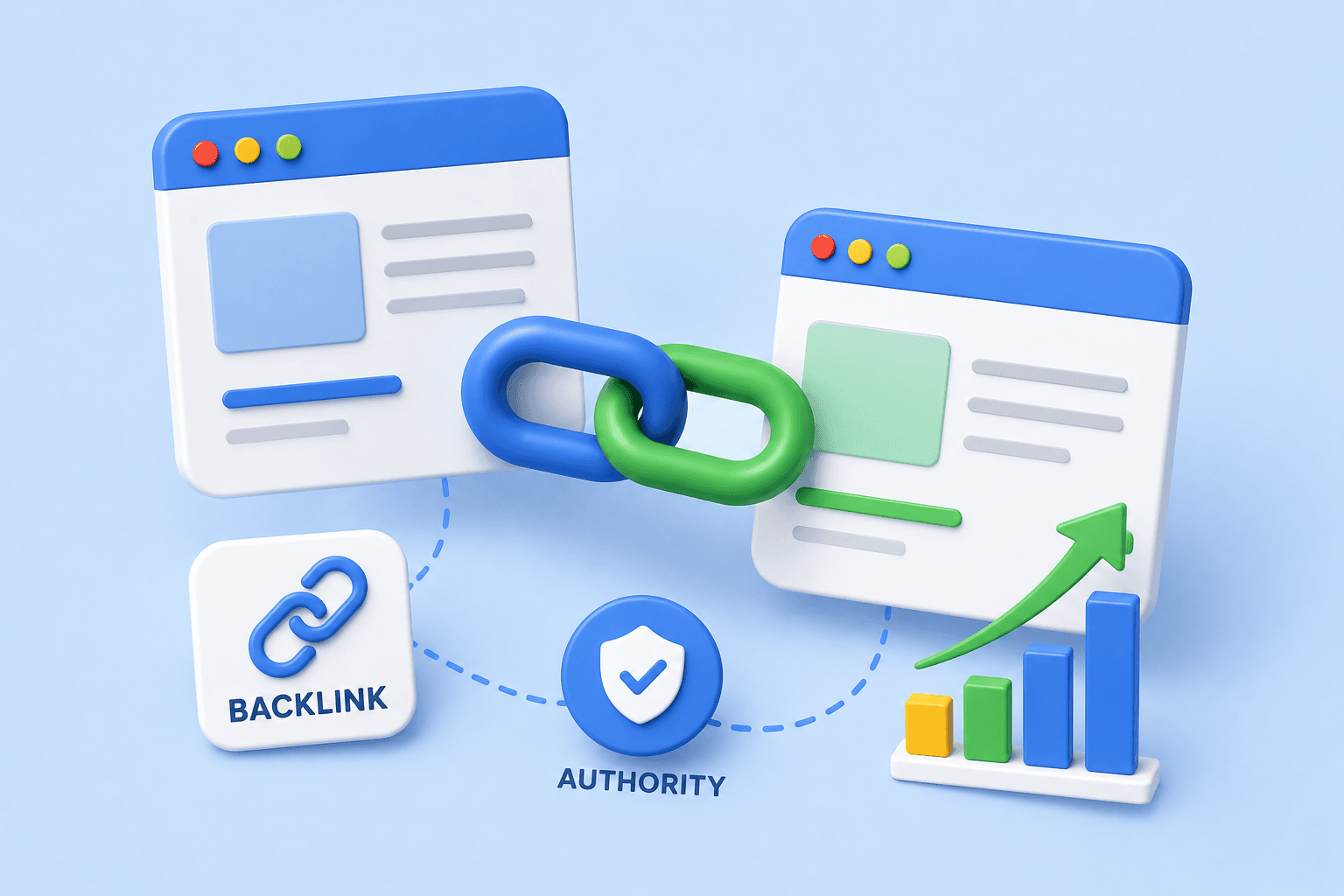
When another website places a link to yours, it does far more than send you a few visitors. In the eyes of search engines, that link looks like a recommendation: someone judged your page useful enough to show it to their own readers.
This is what we call a backlink, and it is one of the most important signals for gaining visibility. The good news is that there is no expert secret here. You simply need to understand why these links matter and how to earn them honestly.
What a backlink is
A backlink is, quite simply, a link that starts on another website and points to a page on yours. If a supplier's blog talks about your shop and adds a link to your site, you have just earned a backlink.
The underlying idea is very human. On the web, a link works like a mention in a conversation: you only point to a page if you find it interesting, reliable or useful. Every incoming link therefore tells a small story of trust.
By contrast, a link you place yourself toward another site is not a backlink for you. What counts here are the links that other people decide to create toward your pages.
Why search engines care
A search engine constantly tries to answer one question: among all the pages that cover a topic, which ones truly deserve people's trust? Backlinks help it decide.
When many credible sites link to a page, the engine concludes that this page is probably an authority on its subject. It is one of the three major signals described in the guide to making your website visible, alongside the relevance of your content and the clarity of your pages.
One point deserves emphasis: quality matters far more than quantity. A single link from a respected site close to your line of work is worth much more than dozens of links from unrelated pages or sites with a poor reputation. A few good recommendations beat a lot of noise.
How to earn links honestly
The best backlinks cannot be bought: they are earned. The principle is simple — be useful, visible or interesting enough that people want to talk about you. Here are some concrete ideas, well within reach of a small business:
- Publish genuinely useful content: a practical guide, a clear answer to a common question, a simple tool. Useful pages naturally attract links.
- Build local partnerships: associations, neighboring businesses and partners in your sector can mention you on their sites.
- Get noticed by local press: a neighborhood newspaper, a regional blog or a specialist outlet will often cover an initiative or a new offering.
- List your business in relevant directories: professional directories, trade federations, repositories tied to your sector — as long as they are credible and connected to your activity.
- Let suppliers and customers mention you: a supplier listing its resellers, a happy customer sharing their experience on a blog — these are all chances for natural links.
The common thread stays the same: give people a real reason to mention you. Quality content, and especially pages that answer real questions, plays a key role here — which is also why it is worth learning to write clear content that ranks.
Practices to avoid
Because links count, some people look for shortcuts. It is almost always a bad idea. Buying links in bulk, taking part in artificial exchanges, or joining networks that swap links among themselves are practices that search engines know how to spot.
The risk is twofold. These links bring no real trust, and if they are identified as artificial, they can actually penalize your site. You then lose money and visibility at the same time.
Relying on bought links is one of the common SEO mistakes to fix. The rule is sound: if a link would not have existed without a hidden trade-off, be wary. A link profile that is slow to build but honest is far sturdier over time.
Keep an eye on your links
Earning links is good; knowing where you stand is better. Get into the habit of occasionally checking which sites link to you. You will sometimes discover mentions you knew nothing about — a chance to say thank you or strengthen a relationship.
What matters most is the trend. Is your number of referring sites slowly growing month after month? Are new links coming from credible sources? A sudden drop or a wave of dubious links deserves your attention.
This monitoring is part of a broader approach: observe what works in order to decide what comes next. That is exactly the spirit of the guide to measuring your SEO results, which helps you watch the right numbers instead of reassuring yourself with empty ones.
Understanding your link profile takes a little practice, and this is where an assistant like semchat proves useful: it reviews who links to your site, spots both the solid links and the fragile ones, and suggests, in plain language, honest ways to earn more — with no jargon and no risky shortcuts.
Turn theory into action
Ask semchat your question and get a clear action plan for your site in seconds.
Try semchat