

Measuring Your SEO Results: The Numbers That Actually Matter
You cannot improve what you do not measure. It sounds obvious — and yet most people who track their SEO measure the wrong things. They watch reassuring numbers that say nothing about their real success.
Measuring well does not mean filling in complicated spreadsheets. It means choosing three or four numbers that truly matter and following them steadily. This guide shows you which ones, and how to read them without getting fooled.
Flattering but empty numbers
Some numbers are pleasant to look at but teach you nothing useful. They are sometimes called vanity metrics: they flatter the ego without guiding a single decision.
The number of pages on your site is one of them. Having a hundred pages is worthless if nobody finds them. In the same way, the number of "tracked keywords" tells you nothing: tracking a thousand keywords brings you nothing if you rank for none of them.
The trap is to reassure yourself with these numbers while the real results stagnate. Before you measure anything, ask a simple question: would this number help me decide what to do next? If the answer is no, move on.
The three numbers that matter
To know whether your SEO is working, three numbers are enough in the vast majority of cases. These are the ones to watch first:
- Your ranking on the searches that matter: do you appear, and in what position, for the searches your customers actually type? Climbing from page 3 to page 1 changes everything.
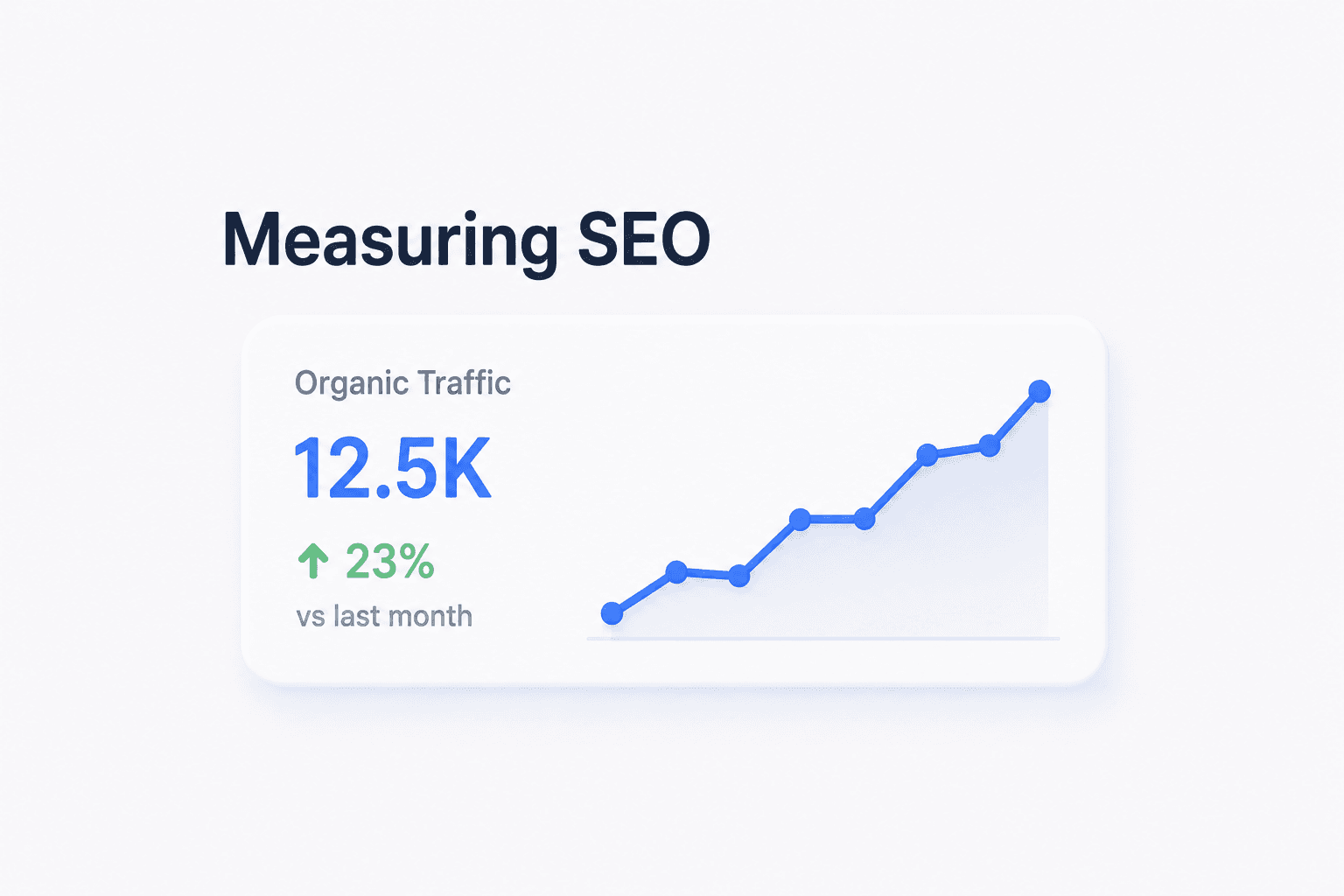
- The trend of your organic traffic: is the number of visitors coming from search growing, month after month? That is the sign your visibility is improving.
- Your conversions: is that traffic turning into contacts, quote requests or sales? It is the only number that translates into revenue.
These three numbers should be read together. Traffic that rises with no conversions at all may signal that you are attracting the wrong visitors — often because you are targeting poorly chosen searches. That is one reason it pays to get your keyword research right from the start.
The free tools
Good news: to track these numbers, you need no paid tool at all. Two free services from Google are more than enough to get started.
Google Search Console shows you how you appear in search results: which searches you show up for, at what position, and how many people click. It is the ideal tool for tracking your rankings and your visibility.
Google Analytics shows you what visitors do once they reach your site: how many arrive from search, which pages they look at, and whether they complete the important actions. This is the tool that tells you about traffic and conversions.
Do not try to explore everything on day one. First locate the few screens that match the three numbers above, and ignore the rest for now.
Read trends, not daily swings
The most common mistake is to check your numbers every day and react to every wobble. SEO does not work that way. From one day to the next, traffic rises and falls for a thousand unimportant reasons: the weather, a public holiday, plain chance.
Judge your results over weeks and months, not over single days. Compare one month with the same month last year rather than with yesterday. A steady trend over three months tells you a hundred times more than an isolated spike.
Reacting to every swing is itself one of the common SEO mistakes: you keep changing course, never giving an action the time to produce its effects.
Turn numbers into decisions
Measuring only makes sense if it leads to action. Every time you look at your numbers, finish with a question: what does this tell me to do next?
A few concrete examples of useful reading:
- A page appears on page 2 for a good search: it is almost ready, so expand it to push it onto page 1.
- A page gets plenty of visits but no conversions: review its content, its offer or its call-to-action button.
- A search is bringing you traffic you had not thought about: create a dedicated page on that topic.
Numbers are not a grade on your work. They are a compass: they do not judge you, they point you toward the next direction.
This is how measurement connects to the broader strategy described in the guide to making your website visible: observe, understand, adjust, start again.
Connecting all these numbers and drawing clear decisions from them takes a little practice. That is exactly what an assistant like semchat does: it connects to your real data, sets aside the empty metrics, and replies in plain language with the next action to take — with no dashboard to decipher.
Turn theory into action
Ask semchat your question and get a clear action plan for your site in seconds.
Try semchat